Securely Install Corrugated Sheet in Dubai to Enhance a Building’s Roof
A strong, reliable roof plays a significant role in safeguarding a building from Dubai’s intense sunlight, dust, heat, and occasional heavy rainfall. Choosing the right corrugated sheet in Dubai can make a noticeable difference in maintenance, durability, sustainability, and overall building performance. As we all know, a corrugated sheet is a practical roofing solution and has the ability to cover large areas efficiently. However, even a high-quality sheet might fail to deliver expected performance if it’s installed incorrectly. Proper alignment, adequate overlaps, secure fastening, and suitable support structures are imperative for creating a dependable roof.
Whether used for workshops, warehouses, industrial facilities, commercial buildings, or temporary structures, corrugated sheet in UAE requires careful installation to achieve long-lasting results. In this comprehensive blog post, we will explain the vital characteristics of corrugated sheets and discuss effective installation practices to create a secure, functional, and weather-resistant roofing system.
What is a Corrugated Sheet?
A corrugated sheet in Dubai is a roofing or cladding material manufactured with a series of alternating ridges and grooves across its surface. This distinctive technical profile enhances the sheet’s structural strength without requiring excessive material thickness. Corrugated sheets can be produced for materials such as aluminium, galvanized steel, or other coated metals, depending on the intended application. Their relatively low weight makes handling, transportation, and installation more convenient than many conventional roofing materials.
Furthermore, the raised profile also helps water flow away from the roof rather than allowing it to remain on a flat surface. Thus, because of their strength and versatility, corrugated sheets are globally used for a wide range of industrial applications. With proper material selection and installation, they can provide dependable protection while supporting practical construction requirements.
Key Features of a Corrugated Sheet
- High structural strength: The ridge profile provides added stiffness and enables the sheets to withstand normal loads experienced during roofing.
- Lightweight design: The corrugated sheets are comparatively easier to transport, cut, and install.
- Resistance to weathering: Metal sheets that have been properly coated will help protect against moisture, sunlight, and varying climatic conditions.
- Water drainage efficiency: The corrugation profile promotes rapid drainage of rainwater to appropriate drainage points.
- Diverse uses: They can be employed in roofs, walls, partitions, sheds, warehouses, workshops, and industrial building roofing.
- Reduced maintenance: The good quality sheets usually do not need much maintenance if installed and maintained properly.
- Variety of materials: Corrugated roof sheets come in various types of metals, thicknesses, coatings, finishes, and profiles.
Technical Configurations of a Corrugated Sheet
| Technical Parameter | Typical Configuration / Consideration |
|---|---|
| Material | Galvanized steel, pre-coated steel, aluminum, or other metal |
| Sheet Thickness | Normally chosen depending on structural and application considerations |
| Sheet Width | Standard and/or project-based sizes in width |
| Sheet Length | May be available in standard or custom-made lengths where required |
| Profile | Corrugated, waved, or other forms |
| Surface Finish | Galvanized, painted, coated, or any other protection system |
| Coating Type | Depending on corrosion and aesthetic considerations |
| Roof Application | Industrial buildings, warehouses, workshops, sheds, commercial buildings, and many others |
| Fastening Method | Roofing screws, self-tapping screws, bolts, washers, or other fastening systems |
| Overlap Requirement | Laps for sides and ends will depend on the profile of the sheets, roof shape, and installation process |
| Support Structure | Purlins, rafters, or other structural supports |
| Drainage Design | Roof slope, gutters, valleys, and downpipes must ensure effective drainage of water. |
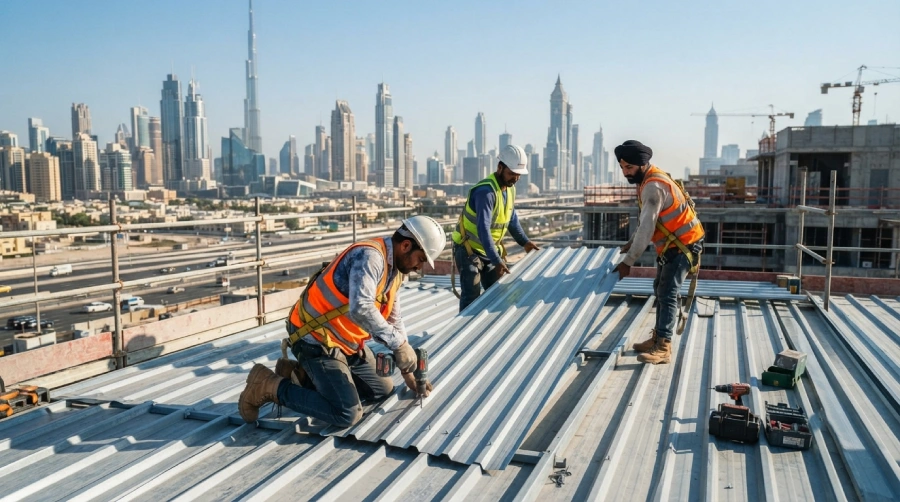
Effective and Secure Ways to Install a Corrugated Sheet to Improve a Building’s Roof
The installation of corrugated roofs is not just about installing the corrugated sheet in UAE on the supporting frame. Every process will affect the durability, water resistance, appearance, and lifetime of the roof. Below are some ways through which an installation may become stronger.
1. Inspection and Preparation of the Supporting Structure
Prior to installing the corrugated sheet in Dubai, the roof frame, purlins, rafters, and other structural components of the roof structure must be inspected and prepared. They have to be in good condition, appropriately aligned, and suitably spaced based on the specifications of the roofing system. All loose materials and obstacles need to be removed from the roof structure before installation. This way, unnecessary stresses can be avoided due to an unstable base.
2. Selection of the Right Specifications for the Sheets
The selection of the correct corrugated sheet in UAE specifications is important in ensuring effective roofing. This includes factors such as thickness, material, profile, coating, and dimensions. The decision on the right product needs to be made considering the location of the building, roof span, loading, water exposure, and uses. In addition, the material and coating of the sheets need to be appropriate for the environment of Dubai.
3. Layout and Overlap Planning
Through proper planning, material wastage can be reduced and, at the same time, the ability of the roof to withstand weather elements can be increased. Identify the direction of laying out, position of sheets, side overlap, end overlap, and placement of the roof penetration prior to nailing down the sheets. In case several sheets are required, overlap should be done as per manufacturer instructions and roof design.
4. Install Sheets with Proper Roof Alignment
Installation of sheets should start from the proper roof edge and should be continued with uniformity. During installation, the corrugated sheet in Dubai needs to remain aligned, and each sheet needs to lie on its supporting structure with ease without being forced. Proper alignment during installation of the sheets is essential since misalignment during installation becomes visible when more sheets are added to the roof.
5. Use Appropriate Fixings and Washers
Fixings have to be appropriate to the sheet and supporting structure. Roofing screws with proper washers will assist in securing the corrugated sheet in UAE without letting water seep in through the fixings. The fixings should be placed in the recommended positions without being overtightened. If overtightened, the sheets or washers might be damaged, and if not tight enough, the sheets will move and leak. This is in line with the fastening requirements of the roofing.
6. Seal Weak Joints and Roof Penetrations
Joints, end laps, flashings, vents, skylights, and other penetrations are weak points through which water might infiltrate, and these points need to be given close attention. Where necessary, sealant materials and flashing components should be used in accordance with the roofing system. The sealants have to be suitable for the roof corrugated sheet in Dubai materials and environmental conditions in the area.
7. Carry out Final Inspection and Maintenance
After installing the roofing system, carry out an inspection of the roof to check for loose fastenings, misaligned sheets, coating damage, open gaps, and inadequate overlapping. Check whether there are any obstructions along the channels that will prevent water from flowing to the gutters and downpipes. If there are any defects arising from installation, they should be fixed before any leakage occurs.
It’s Time to Wrap Things Up!
A dependable roofing system combines accurate materials, proper measurements, suitable structural support, secure fastening, careful finishing, and effective drainage. Corrugated sheet in Dubai can provide a practical balance of strength, long-term usability, and installation convenience when its specifications and installation method are aligned with the building’s requirements. Paying attention to these details can further support consistent roof performance in demanding environmental conditions.
In addition, for businesses seeking reliable corrugated sheet in UAE, Metal and Machine provides quality-oriented solutions designed around practical construction needs. Our experience and skilled team of engineers are here to help you identify appropriate sheet options based on dimensions, material needs, applications, and project needs. From choosing the right configuration to supporting your roofing requirements, we focus on dependable products and professional assistance. So, what are you waiting for? Connect with our team today to discuss your corrugated sheet needs and find a suitable roofing solution for your project.
Frequently Asked Questions
Corrugated sheets can be used for roof covering and wall cladding in:
- Warehouses and factories
- Workshops and garages
- Commercial buildings
- Sheds and storage facilities
- Industrial buildings
It depends on the material, thickness, protective coating, quality of installation, exposure, and maintenance. Well-chosen and well-maintained corrugated sheets will serve reliably for many years.
Sheet thickness and material
- Roof size and geometry
- Sheet profile and loads
- Protective coating
- Environmental conditions
Yes, but only the proper corrugated metal sheet chosen for the local environment can be used in Dubai.
Corrugated sheets are fixed to the supporting members by means of roofing screws or other proper fasteners.