Difference Between Commercial and Residential Steel Construction in Dubai
In the comprehensive world of steel construction, residential and commercial steel construction in Dubai stand out as the two major branches. Both play important roles in shaping the overall environment, yet they differ significantly in their purposes, regulatory conditions, and framework considerations. Whether you are a construction project contractor or a business owner planning to invest in commercial properties, understanding the differences between the two completely different dimensions is vital to making an informed decision and managing the construction project effectively.
However, in this complete blog post, we will discuss the fundamental differences between commercial and residential steel construction in UAE, how each works, and how to know which method fits your construction project goals. Whether you are constructing an apartment, retail space, office building, mixed-use development, or villa, knowing the precise differences helps you act smarter, plan more effectively, and avoid expensive mistakes.
What is a Steel Construction?
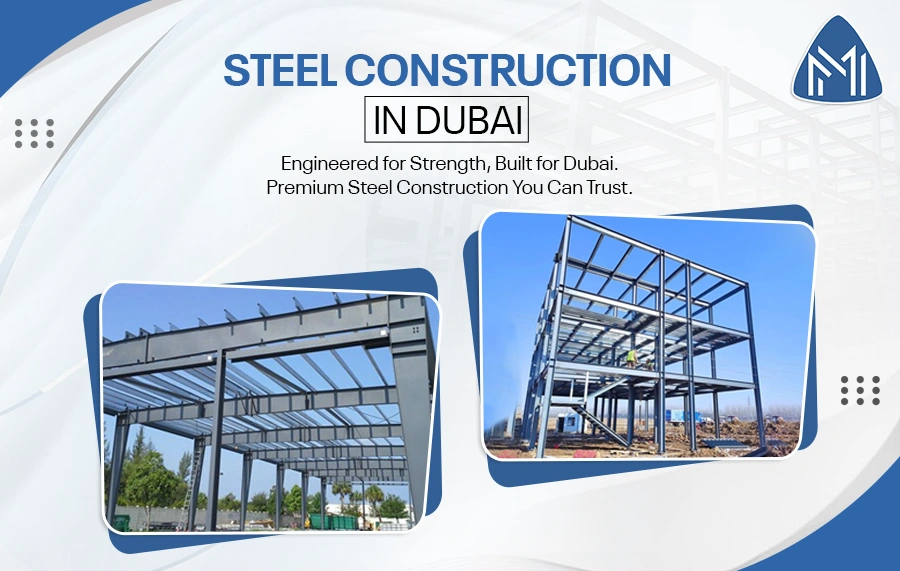
Steel construction is a building approach that uses prefabricated structural steel elements (such as I-beams, plates, and channels) to form a load-bearing framework for steel structures. It is favored for its high strength-to-weight ratio, enabling fast assembly, the construction of skyscrapers, and column-free spaces.
What is a Commercial Steel Construction?
Commercial steel construction in Dubai involves manufacturing steel structures designed for business operations, such as offices, warehouses, manufacturing panels, and retail centers. Given the scale, this entire process requires a collaborative team of professional architects, contractors, and engineers. Every project starts with a tailored proposal that accounts for the client’s specific needs, legal regulations, site location, and preferences. Once this plan is approved by them, the team immediately breaks ground to fulfill the requirements. Ultimately, while commercial construction requires significant financial investment and close coordination, it provides the spaces businesses need to thrive.
Key Features of Commercial Steel Construction
- Steel boasts a remarkable strength-to-weight ratio among construction materials. The use of steel enables large, uninterrupted interior spaces that are ideal for retail outlets, open office environments, and storage facilities.
- Steel members are fabricated in advance at the factory using state-of-the-art technology and precision, resulting in significantly less installation time than traditional cast-in-place concrete, which can take several weeks to set.
- Structural steel withstands extreme external conditions such as strong winds, severe snowfall, and earthquakes.
- Steel exhibits excellent resistance to decay, fungi, and insect infestation, thus offering a durable building life cycle with low maintenance requirements.
What is a Residential Steel Construction?
Residential construction covers a wide range of building and remodeling projects for homes up to four levels tall. Because these residential projects are highly complex and involve numerous stakeholders, partnering with an experienced contractor is crucial for mitigating risks and resolving inevitable issues.
Key Features of Residential Steel Construction
- Steel boasts one of the highest strength-to-weight ratios of any building material. It will not crack, warp over time, rot, or split, ensuring the home maintains its structural integrity for decades.
- Residential spaces are broken up into highly customized rooms (for instance, kitchens, bedrooms, balconies) rather than vast, open-plan commercial floors.
- Residential buildings are smaller and normally limited to 1 to 3 floors. Likewise, the steel framing does not need to support extreme industrial loads or high-occupancy foot traffic, which simplifies foundation and support requirements.
- Steel allows for unique, sweeping layouts that can be easily rearranged later without compromising structural integrity.
Key Differences Between Commercial and Residential Steel Construction in Dubai
Let’s check out the key differences between commercial and residential steel construction in Dubai:
1. Purpose of Construction
Residential construction involves the creation of houses that provide safe, comfortable living conditions for people and their families. Such projects include single-family houses, apartments, villas, townhouses, and other property intended for residents. In general, residential construction aims to create comfortable spaces where people can rest, cook, eat, sleep, etc. Since there is no unified lifestyle for individuals, residential properties are usually tailored to the inhabitants.
Commercial steel construction in UAE aims to create buildings for business or commercial activities. In other words, such projects comprise office buildings, hotels, restaurants, shopping malls, factories, warehouses, laboratories, hospitals, and similar buildings and constructions used for conducting business. Commercial projects aim to ensure the efficient operation of businesses that handle thousands of people each day.
2. Design and Architectural Features
In residential construction, special attention is paid to the design and architectural features of buildings, as people strive to create a comfortable space. In other words, most residential construction is individual and unique because people want their houses to match their tastes and preferences. For instance, the layout of the rooms, kitchen, and bathroom, the lighting system, the garden, and all other elements should correspond to the needs and wishes of the people who live in the building.
In turn, when it comes to commercial construction, it is essential to prioritize functionality over appearance. It means that the design of each construction project depends on the activities to be performed in the building. In addition, there is no need to make commercial buildings impressive, as their function is completely different from that of residential buildings.
3. Codes and Regulations
In the residential building sector, such constructions are required to work to various building codes aimed at ensuring high safety, efficient energy use, and compliance with all other norms. Residential buildings are required to meet certain codes concerning fire safety, ventilation systems, electric systems, plumbing, and many other aspects related to people’s safety and comfort.
In the commercial sector, most buildings should meet more stringent and numerous building codes, as they protect thousands of people from harm. Therefore, there is a need for effective fire protection measures, emergency exits, specialized ventilation systems, and accessibility for people with disabilities, among other requirements. The presence of special codes implies that commercial buildings will require numerous inspections and approvals to make sure they meet all the requirements.
4. Construction Techniques and Materials
Residential steel construction in Dubai uses standard materials and techniques to create reliable, safe living spaces. For instance, in residential buildings, wood, cement, brick, and simple steel structures can be used. In this regard, the construction process is fairly simple, as it involves the use of traditional building methods and materials.
As far as commercial construction projects are concerned, the diversity of applied materials and technologies is much higher than in residential projects. In fact, advanced construction materials are required to ensure the highest quality of construction, such as reinforced concrete, steel frames, and large glass panels.
5. Scale and Cost
Since residential steel construction in UAE is usually a small-scale project, its costs are considerably lower than those of commercial construction projects. It means that building a residential building requires fewer people and materials, ensuring faster project completion.
In turn, commercial construction projects require larger budgets due to their size and complexity. Besides, there are many technological advances used in commercial buildings, including lifts, central heating, cooling systems, alarms, sophisticated electrical networks, and many other elements that entail additional expenditure.
It’s Time to Wrap Things Up!
Whether commercial or residential, each construction project demands technical expertise, robust execution abilities, and regulatory knowledge. So, if you are searching for the right partner for prefabrication and steel construction in Dubai, look no further than Metal and Machine. With extensive experience in the United Arab Emirates construction industry, Metal and Machine delivers compliant, trustworthy, and cost-effective solutions tailored to the client’s needs and preferences.
Commercial and residential differ in many components, including purposes, regulatory demands, and complexity. Therefore, understanding these differences and working with a reliable construction partner ensures a seamless project delivery and long-term significance. So, what are you waiting for? Contact us today to know all the precise details about our steel construction assistance.
Frequently Asked Questions
Commercial steel construction targets business properties such as office buildings, warehouses, and shopping malls, while residential steel construction includes houses, villas, and apartments. Commercial construction is usually more complex and subject to more regulations, while residential construction aims to provide maximum comfort and customizability.
Here are some vital reasons that showcase steel construction is getting popular in the UAE:
- Fast construction time thanks to prefab components
- High durability and resistance to severe weather conditions
- Cost savings during a long period of use
- Ability to create various architectural design projects (both villas and business facilities)
- Environmentally friendly since it involves the recycling of the material
Yes, steel construction is usually cheaper because of reduced labor time, faster building delivery, and less maintenance. For example, most property developers in Dubai prefer steel structures for their longevity and efficiency.
Commercial steel construction is the best option for warehouses and industrial buildings, as it ensures the steel frame can withstand large column-free spaces, heavy machinery and equipment, and high occupancy rates.
Steel construction companies should be experienced and qualified to work in this country, as you need engineering skills and knowledge of UAE regulations to construct steel buildings successfully.